Losing a tooth can affect much more than the appearance of your smile. You may find it harder to chew certain foods, feel self-conscious when you smile, or become more aware of the gap when talking to other people.
If you have one missing tooth, several missing teeth, or are looking for a more secure alternative to removable dentures, dental implants could provide a long-term way to restore both the function and appearance of your smile.
At Walton Dental Surgery, we provide dental implants for patients from Weybridge. Our aim is to make the process clear from the beginning, so you understand your options, what the treatment involves, and what you can expect at each stage.
Whether you have recently lost a tooth or have been living with missing teeth for some time, we can assess your individual situation and discuss whether dental implants are suitable for you.
Want to know whether dental implants could work for you? Contact Walton Dental Surgery to arrange a consultation.
What Are Dental Implants?
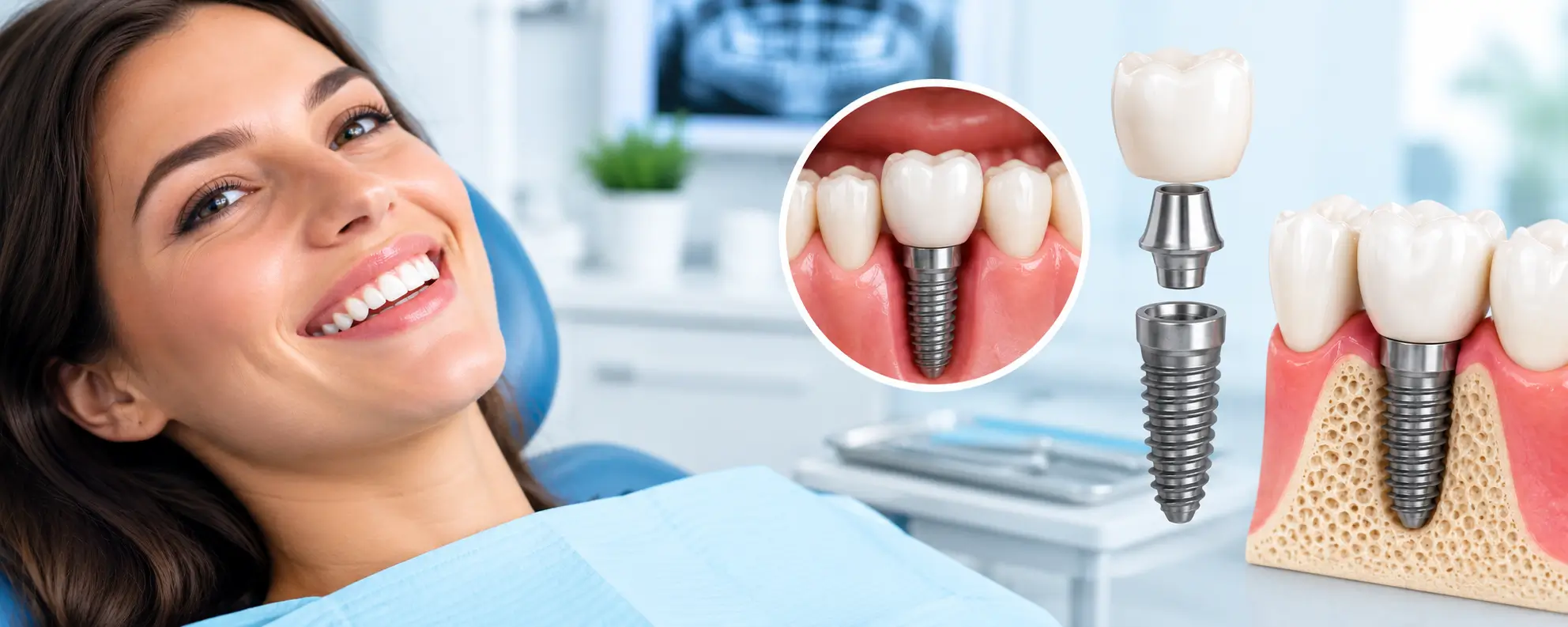
A dental implant is a small titanium implant that is placed into the jawbone to replace the root of a missing tooth.
Once the implant has healed and integrated with the surrounding bone, it can support a replacement tooth, such as a dental crown.
Unlike a traditional removable denture, an implant-supported tooth is fixed in place. This means you do not have to remove it when eating or worry about it moving around in the same way a removable appliance can.
Dental implants can be used to replace:
- A single missing tooth
- Several missing teeth
- Multiple teeth using an implant-supported bridge
- A complete arch of missing teeth with an implant-supported restoration
- Teeth that are no longer suitable for saving, where replacement is appropriate
Your dentist will assess your teeth, gums, jawbone and general oral health before recommending the most appropriate option for you.
Dental Implants for Missing Teeth
A missing tooth can sometimes seem like something you can simply live with. However, leaving a gap can affect the way you bite and chew, and the bone around the missing tooth can gradually reduce over time.
A dental implant provides a way to replace the missing tooth from the root upwards.
The implant is placed into the jawbone and, after a period of healing, is restored with a replacement tooth. The result is designed to look and function as naturally as possible.
For patients replacing a single tooth, an implant-supported crown can provide a fixed alternative to a removable denture or a traditional bridge.
Dental Implants for Multiple Missing Teeth
If you have more than one missing tooth, you may not necessarily need one implant for every missing tooth.
Depending on your individual circumstances, implants can sometimes be used to support a bridge or other fixed restoration.
Your treatment plan will depend on factors such as the number and position of missing teeth, the condition of your remaining teeth and gums, and the amount of healthy bone available.
This is why an individual assessment is an important first step.
What Does the Dental Implant Process Involve?
We understand that the idea of having an implant placed can sound daunting, particularly if you have not had dental treatment for some time.
We take the process step by step and explain what is happening before treatment begins.
- Your consultation
Your first appointment gives us an opportunity to understand your concerns and what you would like to achieve.
We will examine your mouth and discuss your dental and medical history. Where appropriate, further imaging or scans may be recommended to assess the bone and plan the implant placement accurately.
- Your personalised treatment plan
Once we have assessed your situation, we will explain the available options and discuss the treatment that may be suitable for you.
We will also explain the expected stages, timescales, costs and any additional procedures that may be required.
There is no need to decide everything immediately. Our priority is that you understand your options and feel comfortable moving forward.
- Implant placement
The dental implant is carefully positioned into the jawbone under local anesthetic.
If you are particularly nervous about dental treatment, we can also discuss our options for helping you feel more relaxed, including conscious sedation where appropriate.
- Healing and integration
The implant needs time to heal and integrate with the surrounding bone before the final restoration is fitted.
The exact healing period varies between patients and depends on factors such as your oral health, bone quality and the complexity of your treatment.
- Your replacement tooth
Once your implant has healed sufficiently, the replacement crown, bridge or other restoration can be fitted.
The aim is to create a replacement that looks natural and allows you to use your teeth comfortably in everyday life.
Dental Implants for Nervous Patients
If you are nervous about dental treatment, you are certainly not alone.
At Walton Dental Surgery, we understand that dental anxiety can make even the thought of an implant consultation difficult. You do not have to feel embarrassed about being nervous, and you do not need to simply put up with the fear.
Our approach is to create a calm and understanding environment where you can talk openly about your concerns.
We can also provide conscious sedation for suitable patients who feel particularly anxious or are undergoing longer or more involved procedures.
With conscious sedation, you remain able to communicate with the dental team, but you are placed in a deeply relaxed and drowsy state. Your vital signs are monitored throughout the procedure, and a trained sedationist remains with you.
If the thought of injections is one of the things that makes you nervous, we also use The Wand, a computer-controlled local anaesthetic delivery system designed to make injections more comfortable.
You can tell us about your concerns before treatment. We can then discuss the most suitable ways of making your experience as comfortable as possible.
Experienced Implant Dentist in Weybridge
Your dental implant treatment at Walton Dental is supported by an experienced implant dentist – Dr Gurmeet (Gary) Pahuja (GDC No. 155477). Dr Gary qualified in India in 2004 and has been providing dental care to patients in the UK since 2009. He has a special interest in dental implants and has also undertaken training in facial aesthetics and cosmetic smile makeovers. Known for his caring, patient-focused approach, Dr Gary takes the time to understand each patient’s concerns and help them feel comfortable throughout their dental journey.
How Much Do Dental Implants Cost in Weybridge?
At Walton Dental Surgery, dental implants, including a zirconia crown, start from £3,200.
The final cost can vary depending on your individual treatment needs and whether additional procedures are required before or alongside implant treatment.
For example, some patients may require treatment for gum disease, bone augmentation or other preparatory dental work before an implant can be placed.
We will discuss the expected costs with you as part of your treatment planning, so you have a clear understanding of what is involved.
If you are considering regular dental care as well as implant treatment, Walton Dental Surgery also offers a Dental Membership option. You can find out more about what is included and whether membership is suitable for you on our Dental Plan page.
Are Dental Implants Suitable for Everyone?
Dental implants can be an excellent option for many people with missing teeth, but they are not automatically suitable for every patient.
Before recommending implants, we need to consider factors such as:
- The condition of your gums
- The health of your remaining teeth
- The amount and quality of bone available
- Your general health and medical history
- Your ability to maintain good oral hygiene
- Your individual expectations and treatment goals
If there is not enough healthy bone to support an implant, additional treatment may sometimes be possible to prepare the area.
The best way to find out whether implants are suitable for you is to have an assessment with an experienced dentist.
How Long Do Dental Implants Last?
Dental implants are designed to be a long-term solution for missing teeth, but their longevity depends on several factors.
Good daily oral hygiene, regular dental examinations and professional hygiene care can all help maintain the health of your implants and surrounding gums.
Smoking, gum disease, poor oral hygiene and excessive forces on the implant can affect its long-term health.
Looking after your implants is therefore just as important as looking after your natural teeth.
Looking After Your Dental Implants
Once your implant treatment is complete, maintaining good oral hygiene is essential.
You will need to:
- Brush your teeth thoroughly twice a day
- Clean carefully around your implant and replacement tooth
- Attend regular dental examinations
- Have professional hygiene appointments when recommended
- Follow the personalised aftercare advice provided by your dental team
With appropriate care and regular monitoring, your dental team can help you maintain the health and function of your implant for many years.
Why Choose Walton Dental Surgery for Dental Implants?
Choosing dental implant treatment is a significant decision. We believe you should have the opportunity to understand the treatment properly before deciding whether it is right for you.
At Walton Dental Surgery, you can expect:
- Treatment planned around your individual needs
- An experienced implant dentist
- Clear explanations at every stage
- Dental implants including a zirconia crown from £3,200
- Support for nervous and anxious patients
- Conscious sedation where appropriate
- The Wand computer-controlled anaesthetic system
- Ongoing dental and hygiene care to help maintain your oral health
Most importantly, we want you to feel comfortable asking questions. If you are unsure about implants, nervous about treatment or simply want to understand your options, we are happy to discuss them with you.
Ready to Explore Your Dental Implant Options?
You do not have to make a decision about dental implants before speaking to us.
If you have a missing tooth, several missing teeth or dentures that you would like to discuss, arrange a consultation with Walton Dental Surgery.
We will assess your dental health, listen to what you want to achieve, and explain the options available to you, including the expected treatment stages and costs.
If you are looking for dental implants in Weybridge, contact Walton Dental Surgery to arrange your consultation.
Call us on 01932 225748 or contact our team to take the first step towards restoring your smile.
Frequently Asked Questions
Do dental implants hurt?
Dental implant placement is carried out under local anaesthetic, so you should not feel the procedure itself. Some tenderness, swelling or discomfort can occur afterwards while the area heals. Your dentist will explain how to manage this during your recovery.
Can I have dental implants if I am nervous about the dentist?
Yes. Being nervous does not automatically prevent you from having dental implants. At Walton Dental Surgery, we offer a range of ways to make treatment more comfortable, including conscious sedation for suitable patients. We also use The Wand computer-controlled system to provide local anaesthetic more comfortably.
How much do dental implants cost at Walton Dental Surgery?
Dental implants, including a zirconia crown, start from £3,200 at Walton Dental Surgery. Your final cost will depend on your individual treatment requirements and whether any additional procedures are needed.
How long does dental implant treatment take?
The overall treatment time varies from patient to patient. An implant needs time to heal and integrate with the jawbone before the final replacement tooth is fitted. Your dentist will give you a more accurate timeframe after assessing your individual case.
How long do dental implants last?
Dental implants are intended as a long-term replacement for missing teeth. Their lifespan can depend on factors including your oral hygiene, gum health, general health, smoking status and how well you maintain your implants with regular dental and hygiene care.
Can dental implants replace several missing teeth?
Yes. Dental implants can be used to replace several missing teeth. Depending on your situation, implants may support individual crowns, a bridge or another fixed restoration. Your dentist will recommend the appropriate option after assessing your mouth.
Can I have dental implants if I do not have enough bone?
Having reduced bone does not necessarily mean implants are impossible. Some patients may be suitable for bone augmentation or other preparatory procedures. Your dentist will assess the amount and quality of bone available and discuss your options.
Are dental implants better than dentures?
Dental implants and dentures serve different needs, so there is no single option that is right for everyone. Implants are fixed into the jaw and can provide greater stability, while dentures are removable. Your dentist can explain the advantages, limitations and costs of each option based on your circumstances.
What can I eat after dental implant treatment?
Your dentist will give you specific instructions based on your procedure. You may need to choose softer foods initially and avoid putting unnecessary pressure on the treated area while it heals.
How do I look after my dental implants?
Look after your implants much like you would your natural teeth. Brush twice a day, clean carefully around the implant and attend your recommended dental examinations and hygiene appointments. Good gum health is particularly important for maintaining your implants.