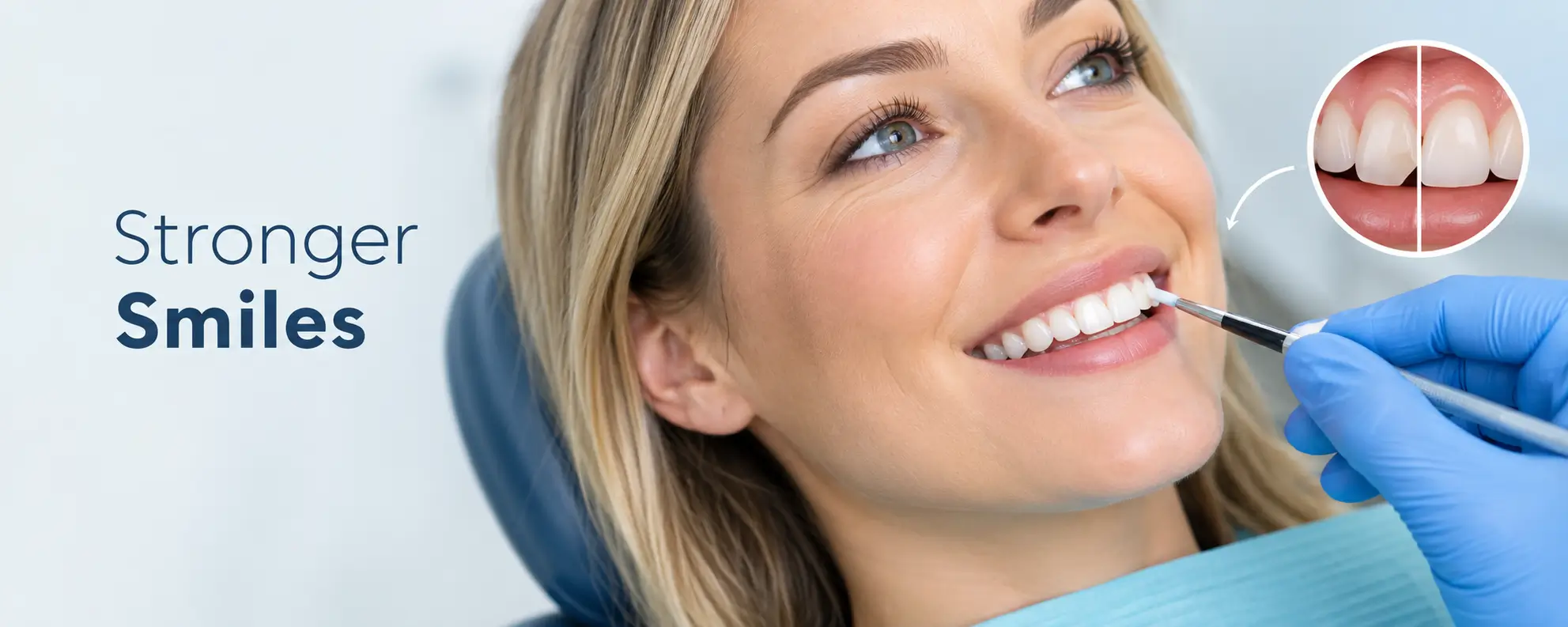
Composite bonding is a cosmetic dental treatment that uses tooth-coloured resin to repair chips, close small gaps and reshape uneven teeth. It is usually completed in a single visit, often needs little or no drilling, and at Walton Dental Surgery in Walton-on-Thames, composite bonding starts from £275.
If you are weighing it up, this guide covers what patients usually want to know: whether bonding suits your teeth, what the appointment involves, how long the result lasts, and how it compares with veneers and clear aligners. We see patients from Walton-on-Thames, Hersham, Esher, Shepperton and Weybridge, and the same questions come up again and again, so we have answered them honestly here, including where bonding is not the right choice.
What is Teeth Bonding?
Teeth bonding, also called dental bonding or composite bonding, involves applying a putty-like, tooth-coloured composite resin to the surface of a tooth. The dentist shapes it by hand, hardens it with a special light, and polishes it until it blends with the tooth next to it.
The resin is matched to the natural shade of your teeth, so a repaired edge or reshaped tooth should not stand out. Because the material is added to the tooth rather than replacing part of it, bonding is considered one of the more conservative cosmetic options. In many cases the enamel is only lightly roughened so the resin can grip, and local anaesthetic is often not needed unless the tooth is sensitive or there is decay to treat.
You will sometimes hear bonding and veneers mentioned together. They are different treatments, which we compare in detail below.
What Can Composite Bonding Fix?
Bonding works best for small, specific concerns. Common uses include:
- Chipped teeth: rebuilding a broken corner or edge, most often on the front teeth.
- Small gaps: closing a narrow space between two teeth, such as a gap between the front teeth.
- Uneven edges: smoothing teeth that have worn down or look jagged.
- Slightly short teeth: adding length so the smile looks more balanced.
- Mildly misshapen teeth: improving the shape or symmetry of a tooth that is a little too narrow, pointed or small.
- Some marks and discolouration: covering localised areas that do not respond well to whitening.
It is just as important to know what bonding cannot do. It is not the right tool for correcting significant crowding, changing the overall colour of every tooth, or rebuilding a tooth that has lost a large amount of structure. For those situations, other treatments give a more predictable and longer-lasting result, and a good dentist will tell you so rather than simply offering bonding.
Is Composite Bonding Right for You?
Bonding tends to suit people who have:
- Healthy teeth and gums
- Small cosmetic concerns rather than major changes
- Enough natural tooth structure for the resin to bond to
- Good day-to-day oral hygiene
- A preference for a treatment that is quick and preserves as much tooth as possible
It may not be the best first option if you have extensive decay, a heavily broken tooth, active gum disease, a significant bite problem, or heavy grinding that has not been managed. In these cases the underlying issue usually needs treating first, or a different restoration may hold up better. That is a clinical decision, and it is made at an examination rather than from a photo.
What Happens During a Dental Bonding Appointment?
Most patients are surprised by how straightforward it is. A typical visit follows these steps:
- Examination and discussion. Your dentist checks the health of the teeth and gums, listens to what you want to change, and explains what is realistic.
- Shade matching. A shade guide is used to pick the resin colour that best matches your natural teeth.
- Preparing the surface. The tooth is lightly conditioned so the resin can attach securely. Drilling is usually minimal or unnecessary.
- Applying and shaping the resin. The composite is placed in layers and sculpted to the right shape, length and contour.
- Hardening with a curing light. A blue light sets the material within seconds.
- Polishing and bite check. The surface is finished to a natural sheen and your bite is checked so nothing feels high or uncomfortable.
The time needed depends on how many teeth are being treated and how much reshaping is involved, so your dentist can give you a realistic estimate at your assessment.
Is Composite Bonding Painful?
For most people, no. Because the treatment is usually minimal-preparation, many patients have it done without any injection. You may notice pressure or a little sensitivity, particularly if a tooth is already sensitive to cold. If your dentist thinks you would be more comfortable with local anaesthetic, it can be used.
Afterwards, some people feel mild sensitivity for a short while, and the tooth can feel slightly different to your tongue until you get used to the new shape. If your bite feels high or uneven, tell your dentist, as it is a quick adjustment. If you are nervous about dental visits in general, let the team know when you book so they can plan the appointment around you.
The Benefits Of Composite Bonding
- It can noticeably improve the shape, length and symmetry of a tooth.
- The resin is tooth-coloured and can be matched closely.
- It is often minimally invasive compared with treatments that reshape the whole tooth.
- Many cases can be completed in one visit.
- If the resin chips or wears, it can usually be repaired or topped up rather than replaced from scratch.
- It is generally more affordable than porcelain alternatives.
The Limitations Of Composite Bonding
A trustworthy guide should be upfront about the downsides:
- Composite can chip or wear, especially on biting edges.
- It can pick up stains over time, more than porcelain does.
- It is generally less durable than porcelain veneers or crowns.
- It may need polishing, repair or replacement during its lifetime.
- It cannot fix every cosmetic concern, and results depend on your bite, habits and the condition of your teeth.
None of these mean bonding is a poor choice. They simply mean it is best suited to the right kind of case and works best when you look after it.
How Long Does Composite Bonding Last?
Bonding is not permanent. Many dentists commonly quote several years, often somewhere in the region of 5 to 10 years, but the real figure varies from person to person. Your dentist can advise what is realistic for your own mouth.
The main factors that affect longevity are:
- Oral hygiene: regular brushing, flossing and check-ups help keep the edges of the resin healthy.
- Diet: frequent tea, coffee, red wine and smoking can stain composite over time.
- Grinding or clenching: this puts extra stress on the material and can shorten its life.
- Habits: biting nails, pen lids or ice can chip the resin.
- Which tooth is treated: front biting edges take more strain than the surface of a tooth that is not under load.
- The amount of resin used: small repairs typically last longer than large reshaping.
Composite Bonding Vs Veneers
This is one of the most common comparisons, and neither option is automatically better. It depends on what you want to change.
| Factor | Composite bonding | Porcelain veneers |
|---|---|---|
| Material | Tooth-coloured composite resin | Porcelain (thin shell) |
| Tooth preparation | Usually minimal | Usually some enamel removal |
| Treatment time | Often a single visit | Typically, more than one appointment |
| Best for | Minor changes and repairs | More significant cosmetic changes |
| Stain resistance | More prone to staining | More stain resistant |
| Repairability | Often easy to repair or top up | May need replacing if damaged |
| Cost | Generally lower | Generally higher |
If you have one chipped tooth or a small gap, bonding is often a sensible starting point. If you want to change the colour and shape of many teeth at once, veneers may give a more lasting result. An assessment lets your dentist show you which suits your goals and budget.
Composite Bonding Vs Clear Aligners
The two treatments solve different problems. Bonding changes the shape of a tooth. Aligners such as Invisalign move the teeth into a new position.
A small gap can sometimes be closed visually with bonding, which is quick. But if the gap exists because teeth are crooked or spaced across the arch, moving them is often the more natural solution, and in some cases the two are combined: aligners first to position the teeth, then a little bonding to fine-tune the finish. For people who want a shorter route to straighter-looking front teeth, a short-term orthodontic option such as Six Month Smiles may also be worth discussing.
How Much Does Composite Bonding Cost?
At Walton Dental Surgery, composite bonding starts from £275.00. As with most cosmetic treatments, the final figure depends on your individual case, so the starting price is best understood as a guide rather than a fixed quote for every situation.
Things that influence the final cost include:
- The number of teeth being treated
- The amount of composite needed
- How complex the reshaping is
- The position of the tooth in the mouth
- Whether existing fillings or restorations are involved
- Whether any other dental work needs to be done first
- The level of cosmetic change you are after
Please note that consultations are charged, so it is worth asking about the assessment fee when you book. Once your dentist has examined your teeth, you will be given a clear treatment plan and cost before anything begins, so there are no surprises.
How To Look After a Teeth After Bonding?
Bonded teeth do not need anything unusual, but a few habits will help them last:
- Brush twice a day and clean between your teeth daily.
- Keep up regular check-ups and hygiene appointments so the edges can be checked and polished.
- Avoid biting hard objects, and try to stop habits such as nail biting.
- Cut back on frequent staining drinks, or rinse with water afterwards.
- If you grind or clench, ask about a night guard to protect both your natural teeth and the bonding.
Who May Not Be a Good Candidate?
Bonding may not be advisable if you have extensive decay, significant structural damage to a tooth, severe bite problems, active gum disease, poor oral hygiene, or heavy grinding without protection. Your dentist will confirm what is clinically appropriate and may recommend treating the underlying issue first.
Frequently Asked Questions
What is teeth bonding?
Teeth bonding is a cosmetic treatment in which tooth-coloured composite resin is applied, shaped and hardened onto a tooth to improve its shape, size or appearance.
Is composite bonding the same as dental bonding?
Yes, in everyday use the terms are interchangeable. Both refer to composite resin being bonded to the tooth surface.
How much does composite bonding cost in Walton-on-Thames?
At Walton Dental Surgery, composite bonding starts from £275.00. The final price depends on how many teeth are treated and how much work each one needs.
Is composite bonding painful?
Most people find it comfortable. Anaesthetic is often not needed, though it can be offered if you are sensitive or nervous.
How long does composite bonding last?
It varies, but many patients can expect several years with good care. Grinding, staining habits and biting hard objects can shorten this.
Can composite bonding fix chipped teeth?
Yes, small to moderate chips are one of the most common reasons people choose bonding.
Can bonding close gaps between teeth?
Small gaps can often be closed. Larger gaps or gaps caused by crowding elsewhere may be better treated with orthodontics.
Can bonded teeth be whitened?
Whitening does not change the colour of composite. If you plan to whiten your natural teeth, it is usually best to do that first so the bonding can be matched to the new shade.
Is bonding better than veneers?
Neither is universally better. Bonding is more conservative and usually cheaper, while veneers are more durable and stain resistant.
Does composite bonding stain?
It can, more readily than porcelain, particularly with coffee, tea, red wine or smoking. Polishing at check-ups helps.
Can composite bonding be removed?
Usually yes. Because it is added onto the tooth with minimal preparation, it can often be removed or replaced, though your dentist will confirm this for your case.
Do you treat patients from outside Walton-on-Thames?
Yes. Many of our patients travel from Hersham, Esher, Shepperton, Weybridge and other parts of Surrey.
Considering Composite Bonding? Start With an Assessment
Not sure whether bonding, veneers or orthodontics is the right fit for your teeth? A dental assessment can help you understand which option suits your goals and budget before you commit to anything.
If you are in Walton-on-Thames or nearby in Hersham, Esher, Shepperton, Weybridge or elsewhere in Surrey, get in touch with Walton Dental Surgery to book an appointment.